
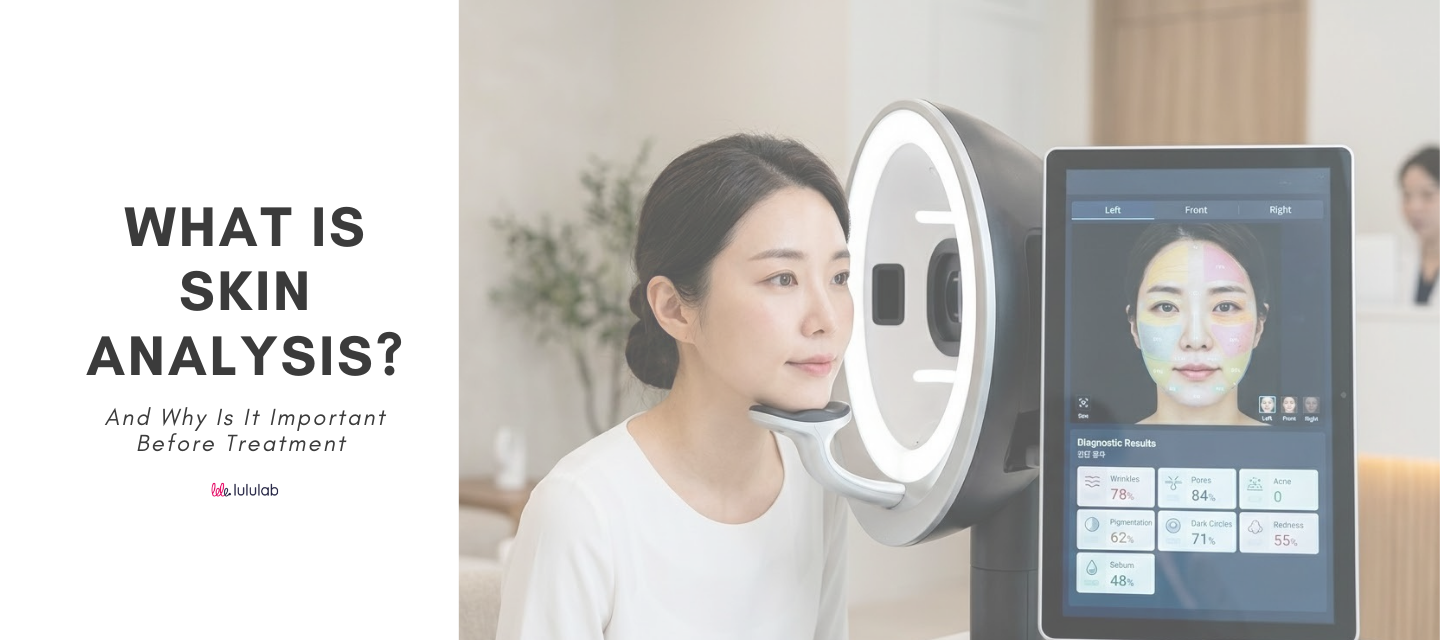
What Is Skin Analysis and Why Is It Important Before Treatment
Summary Block
This article explains what skin analysis is, why it is important before starting any skincare or aesthetic treatment, and how AI technology enhances traditional evaluation. It is designed for medical tourists, skincare enthusiasts, and anyone looking to understand their skin’s current condition before investing in treatments or products.
Readers will gain a clear understanding of how professional and AI-powered skin analysis improves treatment safety, efficacy, and personalization, helping them make informed decisions about their skin health.
Reviewed in accordance with Korean board-certified dermatology standards.
Medical Disclaimer: The content provided in this article is for informational purposes only and is not a substitute for professional medical advice, diagnosis, or treatment. Always seek the advice of your physician or other qualified health provider with any questions you may have regarding a medical condition or skin concern.
Our skin changes due to the environment, our lifestyle, and basically how our hormones are behaving, so what worked last season could no longer work today. That's why getting a skin analysis before you start throwing money at a skincare routine is a good idea.
In Korean dermatology clinics, careful skin evaluation is a routine procedure that guides treatment plans to ensure they are safe, effective, and tailored to your skin condition.
That’s why a skin analysis is a smart first step before investing in a skincare routine.
What Is Skin Analysis?
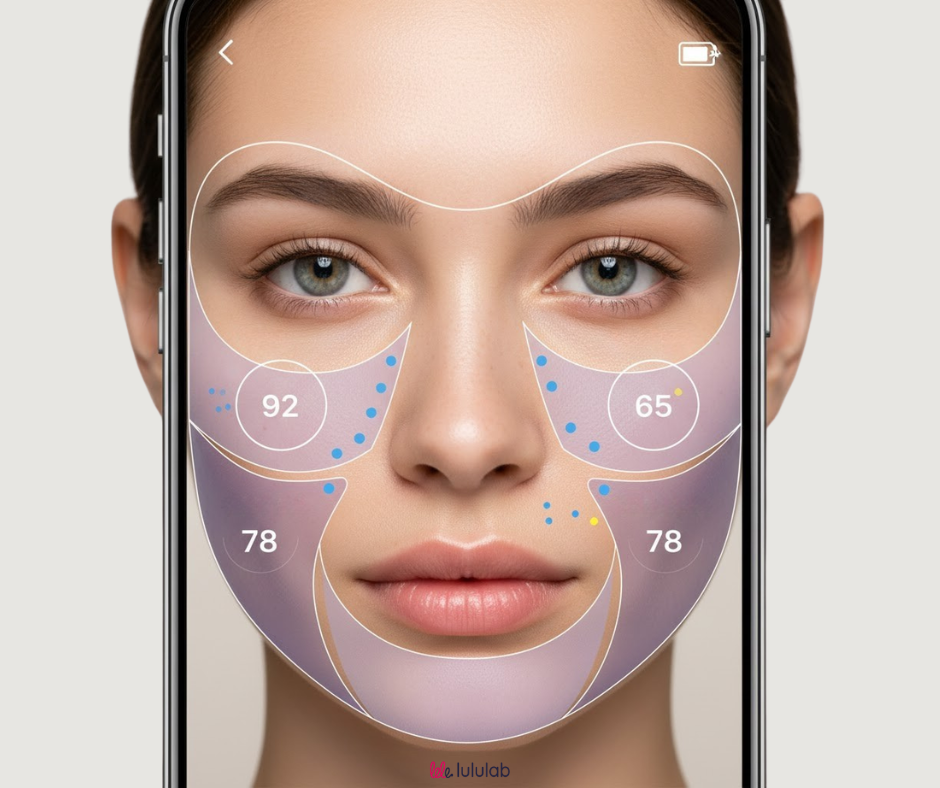
Skin analysis is the process of understanding your skin’s current condition by evaluating multiple factors that influence overall health. Rather than relying on assumptions, it lcaoks at both visible and underlying concerns, such as hydration, oil levels, texture, tone, and early signs of aging.
Currently, this process integrates the knowledge of professionals with cutting-edge AI technology to provide clearer and more precise insights into your skin. Using image-based data, the analysis takes a close look at factors such as sebum distribution, pore size, pigmentation, and surface irregularities.
It underscores areas of stress on the skin barrier or imbalances that could affect your skin's long-term health. This lets you make more thoughtful choices about your skincare routine, so you make sure you're doing what your skin really needs now and down the line.
Traditional Skin Typing vs AI Skin Analysis
Traditional skin typing categorizes skin as oily, dry, combination, or sensitive. It helps explain baseline behaviors such as sebum balance, reactivity, and general moisture needs. This method only provides a starting point. It's not bad for working out how your skin will probably react to products or changes in the environment.
AI skin analysis goes further by evaluating real-time hydration levels, texture, and subtle surface patterns that human observation can miss. By capturing the current skin condition, AI reveals how lifestyle, climate, and daily habits are affecting your skin health.
Pairing traditional typing with AI insights gives you a way more complete and practical understanding of your skin, which is super useful.
LuluLab AI Skin Analysis
At LuluLab, skincare should be tailored, not trendy. Which is why our AI skin analysis technology makes you understand your skin for tailored solutions.
LuluLab AI Skin Analysis utilizes advanced technology to read visible details and translate them into meaningful insights about your skin condition, offering more depth than traditional skin typing alone.
Our approach blends traditional findings with cutting-edge AI-driven insights, ensuring that every product you use doesn't just treat a symptom but also supports your skin’s natural balance and long-term health. This deep understanding transforms your routine from a hopeful experiment into a targeted, effective regimen.
Using AI deep learning algorithms trained on a database of over 5 million skin data points, we accurately measure and quantify nine key indicators of skin health and overall condition:
- Wrinkles
- Pores
- Acne
- Pigmentation
- Dark circles
- Redness
- Sebum
In addition, the analysis identifies your traditional skin type, reflecting how your skin behaves day to day: oily sensitive, oily resistant, dry sensitive, dry resistant, combination resistant, or combination sensitive.
From this comprehensive analysis, you receive your luluTI™—a personalized four-letter code that translates your skin’s unique data into a customized plan, helping you track your skincare journey and make informed decisions.
Your Results: Understanding 16 luluTI™ Skin Code
One of the key advantages of LuluLab AI Skin Analysis is its 16 luluTI™ skin types, which go far beyond basic skin categories. This is where real personalization starts.
Your results are presented as a four-letter luluTI™ code, with each letter representing a specific skin tendency:
luluTI™ Component | Focus Area | What it Indicates |
|---|---|---|
Wrinkle/Elastic | Aging | Structural integrity, including collagen density and the skin's natural rebound capacity. |
Acne/Unflawed | Inflammation | The balance of sebum production and the presence of bacterial or environmental irritation. |
Texture/Smooth | Surface | The level of pore refinement and the overall smoothness or congestion of the skin's top layer. |
Pigmentation/Clear | Tone | The distribution and concentration of melanin, tracking clarity against UV damage or hormonal shifts. |
Your final luluTI™ code will be one of these combinations:
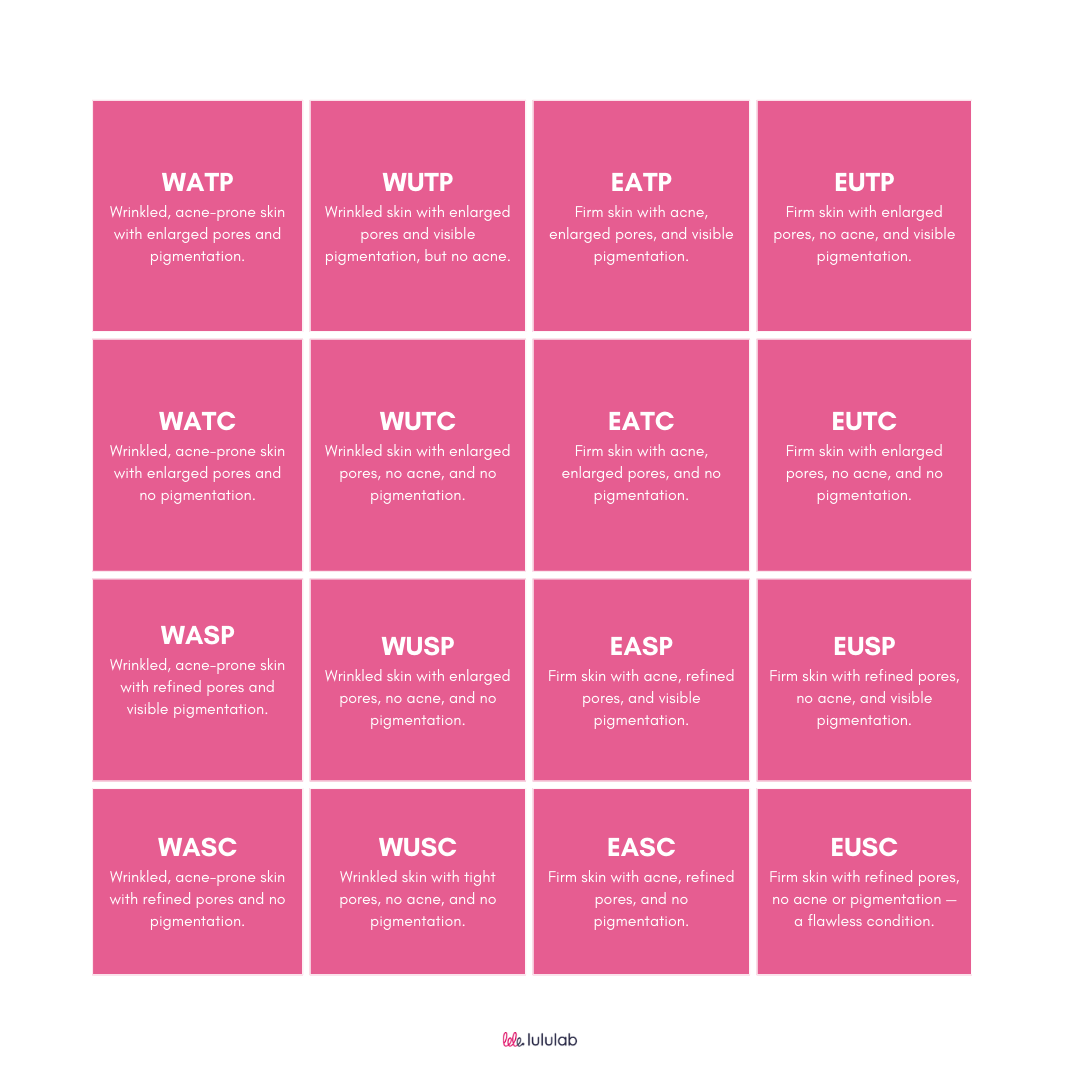
WATP, WATC, WASP, WASC, WUTP, WUTC, WUSP, WUSC, EATP, EATC, EASP, EASC, EUTP, EUTC, EUSP, EUSC
These 16 skin types form the basis for personalized skincare, treatments, and long-term care. Instead of treating all patients labeled as “dry” or “oily” the same way, practitioners can customize interventions based on each individual’s unique skin profile.
The result is smarter skincare plans, safer treatments, better results, and routines that change as your skin changes.
Tools Used in Professional Skin Analysis
- UV Imaging: Reveals sun damage and porphyrins (acne-causing bacteria) deep in the pores.
- Polarized Light (Parallel & Cross): Used to analyze both surface texture and deeper pigmentation by reducing oil reflection and glare.
- RGB Light: Captures natural skin tone, pores, and wrinkles under standard white light.
- Manual Assessment: A trained professional validates the AI data to ensure the context of your lifestyle is considered.
AI skin analysis is also accessible using your own smartphone. By taking a facial image with your phone, you can undergo a simple yet insightful AI-based skin test without needing all the special equipment.
Note: Results may vary depending on image quality, lighting conditions, camera resolution, and angle.
So while it's a handy starting point, it's still advisable to have an expert look it over as well.
Clinical Oversight & Medical Standards
AI technology provides valuable data insights, but professional skin analysis should always be interpreted within a clinical framework. In leading Korean dermatology clinics, evaluations follow evidence-based standards guided by the Korean Dermatological Association.
AI-generated metrics such as pigmentation, pore visibility, and elasticity are reviewed alongside a licensed medical professional’s clinical judgment. This combination of technology and physician oversight ensures treatment recommendations are safe, appropriate, and tailored to your long-term skin health goals.
What to Expect During a Skin Analysis
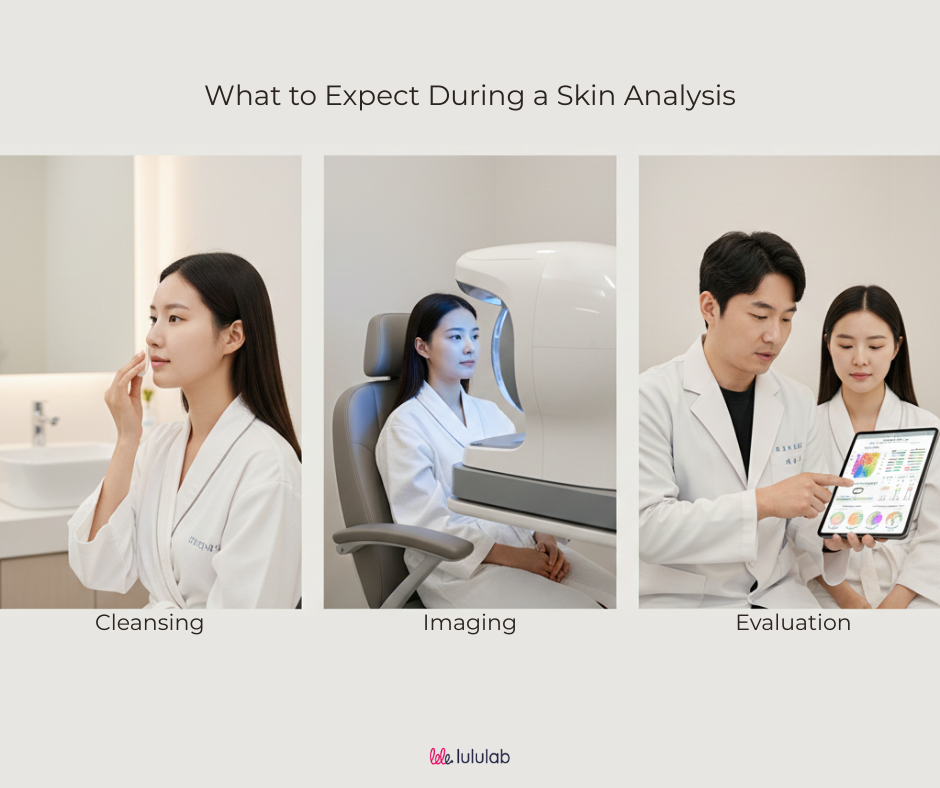
The process is simple, comfortable, and noninvasive:
1. Cleansing: Make sure to remove any makeup or any skincare products to ensure the sensors read your bare skin.
2. Imaging: You sit in front of a specialized camera or kiosk for a few seconds while it snaps multispectral images.
3. Evaluation: The system generates a report, which you review with a specialist to plan the best course of treatment.
How Long Is Skin Analysis?
The entire process is efficient. The scan itself takes only a few seconds, while the consultation usually lasts 15–30 minutes. This short investment of time ensures that the subsequent hours or weeks of treatment are perfectly targeted.
Risks of Skipping Professional Skin Analysis
→ Skin misdiagnosis: Hormonal acne may be treated as a surface issue, sensitivity can be mistaken for dryness, and dehydration may go undetected. When the root cause of your skin concern is misunderstood, treatments may address the wrong skin concern at the outset.
→ Treatment failure: When the root cause is not addressed, even high-quality treatments may show little to no improvement. This often results in frustration, with patients feeling they wasted time and money despite following recommended treatment procedures.
→ Adverse effects: Without proper guidance, it can harm your skin, weaken the skin barrier, trigger irritation, or worsen existing concerns. Over-treating acne, exfoliating compromised skin, or applying aggressive treatments to sensitive skin increases the risk of a negative reaction.
→Inefficiency in treatment planning: Without accurate analysis, treatment plans become trial-and-error and would lead to unnecessary procedures, wasted expenses, longer recovery times, and delayed results that could have been avoided with a proper assessment.
Why One-Size-Fits-All Skincare Doesn't Work
Skin varies from person to person. A product that works for your friend might actually cause a breakout for you. This analysis ensures your skincare plan is matched to your individual needs.
Top Benefits of AI Analysis for Aesthetic Patients
✔ Patient safety: Finds hidden skin issues to minimize the risk of adverse reactions, ensuring every treatment is safe and customized to your skin profile's needs.
✔ Treatment efficacy: It targets the root cause of skin concerns rather than surface symptoms, increases the likelihood of successful results, and improves overall clinical outcomes.
✔ Personalized care: Analyze unique indicators (from wrinkles to elasticity) to create a fully tailored plan that eliminates guesswork and optimizes results.
✔ Cost efficiency: Highlights the most effective solutions immediately, helping you avoid spending on ineffective treatments and maximizing the value of your money.
✔ Progress tracking: Objective, measurable "Before" and "After" scans track measurable improvements, providing visual proof of efficacy and motivation throughout your skincare journey.
Signs Your Skin Needs Professional Analysis
If you start to notice persistent breakouts, uneven skin tone, sudden sensitivity, or notice that your usual products have stopped working, it may be time for a professional AI skin analysis. These changes often signal underlying issues that aren’t visible to the naked eye.
While everyone can benefit from a baseline analysis, it’s especially important for first-time aesthetic patients visiting Korea, anyone beginning a new anti-aging routine, or those preparing for advanced treatments such as lasers or injectables.
Final Thoughts
Effective skincare and aesthetic treatments start with understanding your skin today rather than guessing what it might need tomorrow. LuluLab AI Skin Analysis provides clear, actionable information so you can make smarter choices about what products, routine, and treatment procedures to choose.
Even small adjustments based on these insights, such as addressing subtle dehydration, targeting early pigmentation, or fine-tuning anti-aging care, can make a big difference in your skin's health.
This isn't just about a quick fix; it’s about building a reliable foundation that catches changes early, making sure that every step leads to lasting, glowing skin.
FAQs
1. Can I do a skin analysis at home?
Yes! AI skin analysis can be done right from your smartphone to get a baseline reading without any special equipment. Keep in mind, however, that results are heavily influenced by lighting and camera quality, so having a professional validate your data ensures the most accurate insights.
Click here to start your free skin test.
2. How often should I get a skin analysis?
It's ideal to get a scan whenever your usual products stop working or before starting a new treatment plan. Many patients opt for a scan seasonally or before major aesthetic procedures to track progress effectively.
3. Is the scanning process painful or invasive?
Not at all. The LuluLab AI analysis is entirely non-invasive and comfortable. You sit in front of a specialized camera or kiosk for a few seconds while it captures images. It is entirely comfortable and safe for every skin type.
4. Is AI analysis suitable for all ages?
Yes. It works for every age and skin type. It focuses on the specific issues that matter most for your age.
5. Can AI analysis replace a dermatologist?
No. It works alongside your doctor's advice. The analysis gives you data to help with daily care, but a professional is still needed for medical diagnosis and treatment planning.