
Stem Cell Therapy in South Korea: Everything You Need to Know
For years, the conversation around anti-aging was dominated by surgical lifts and fillers. Conventional skin treatments often focus on covering signs of aging. But today, the focus is shifting. We are seeing a rise in regenerative medicine, which aims to heal and restore the skin from within.
At the forefront of this shift is Stem Cell Therapy, one of South Korea’s most advanced innovations. It is not just about looking younger; it is about biologically revitalizing your skin’s potential. Stem cell therapy has become a buzzword for a reason—it represents the intersection of beauty and deep science.
If you are curious about this stem cell treatment, you are not alone. In this guide, we will help you understand stem cell therapy, how it works, and most importantly, how to decide if it aligns with your skincare journey.
What Is Stem Cell Therapy, in Simple Terms?
Think of stem cells as your body’s "master cells." They are unique because they have the potential to develop into many different specialized cell types (such as nerve cells, blood cells, or skin cells). In the context of skincare, they act as a repair crew.
Stem cell therapy involves using these cells to replace dead cells and repair damaged tissues. When applied in stem cell regenerative treatments, stem cells (often extracted from adipose tissue or ethically sourced umbilical cord blood) release powerful growth factors.
These factors signal your existing cells to wake up, repair damaged cells, and generate new collagen. Unlike fillers, which add artificial volume, stem cell therapy targets the root causes of aging by helping your skin rebuild itself naturally.
Why Korea Is Leading in Stem Cell Aesthetics
South Korea has earned its reputation as the global capital of medical innovation, and stem cell therapy is no exception. Here, the intersection of rigorous science and cosmetic artistry creates a unique environment for advanced care.
- Government Support: Korea has established specialized zones and regulations to support safe stem cell research and clinical trials.
- Medical Expertise: Korea is recognized internationally for its medical innovations. Behind these advancements are board‑certified regenerative medicine specialists, delivering treatments with safety protocols that uphold Korea’s high aesthetic standards.
- Accessibility: Korean clinics are equipped with dedicated centers for international patients, making high-level medical tourism seamless for global travelers.
Beauty Applications of Stem Cell Therapy
Why do people choose this treatment?
Stem cell applications go far beyond surface-level changes.
Skin Rejuvenation (Cellular Repair): Think of this as deep biological maintenance. Stem cells act as a microscopic "repair crew" that identifies and fixes damaged tissue. They work to replace dead or senescent ("zombie") cells with healthy, functioning ones, restoring the skin's biological vitality and natural glow.
Anti-Aging & Firming (Structural Lift): This specifically targets the loss of volume and structure. By signaling your body to massively boost collagen and elastin production, the treatment rebuilds the skin’s underlying matrix, helping to physically lift sagging areas and restore a firm, "bouncy" texture.
Scar & Pigmentation Repair: Stem cells are incredible healers. They help modulate the immune system to reduce inflammation and remodel scar tissue, while simultaneously regulating melanin production to fade stubborn dark spots. This dual approach restores both skin texture and tone from the inside out.
Hair Restoration: Hair loss is a common concern. Follicular stem cells can invigorate dormant hair follicles to encourage new growth. Autologous follicular stem cells are increasingly used in hair loss treatment to restore scalp health.
Post-Procedure Healing: Many patients combine this with lasers or surgery because healthy cells significantly speed up recovery and reduce downtime.
Types of Stem Cells Used in Aesthetic Treatments
It is important to know that not all stem cell treatments are the same. Just like you have different skincare products for different needs, different types of stem cells serve various purposes.
1. Adipose-Derived Stem Cells or ASCs (From Your Own Fat)
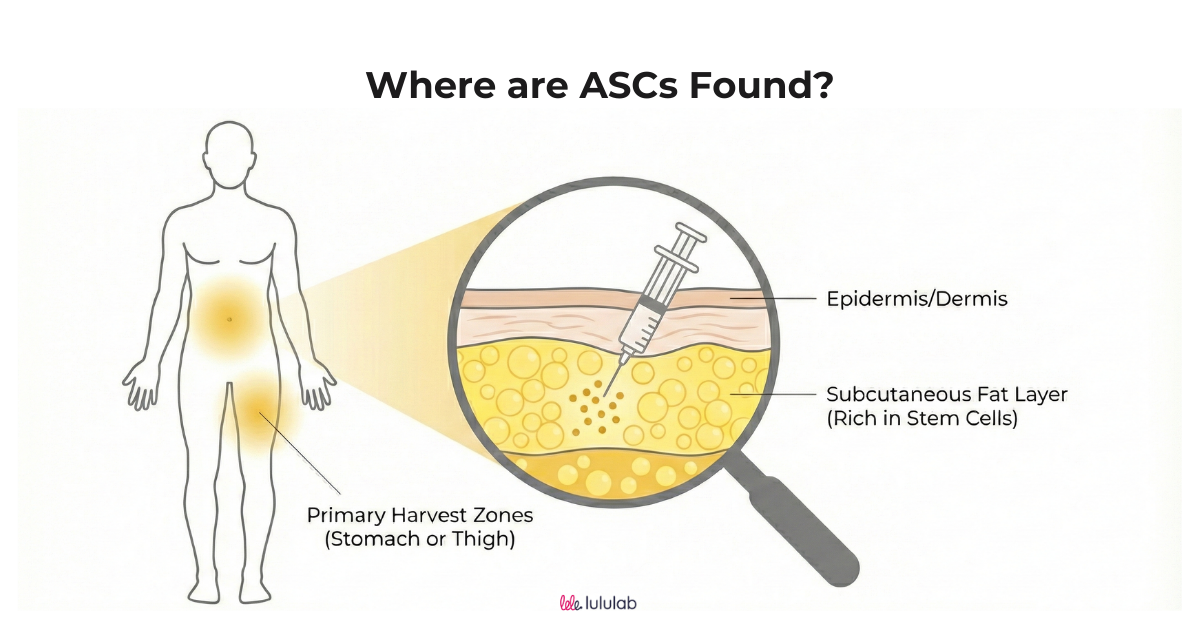
These are the most popular stem cells used for skin rejuvenation. Your specialist gently harvests a small amount of adipose tissue from areas such as the thigh or stomach, where subcutaneous fat is readily accessible.
Why are they safe?
Because ASCs are autologous stem cells, meaning they come from your own body, there is virtually no risk of rejection or allergic reaction.
What do they do?
ASCs are rich in mesenchymal “repair cells” that support collagen regeneration and overall skin repair. During treatment, they are typically injected into the deep dermis or the subcutaneous layer beneath the skin. These layers are where they can most effectively restore volume, improve elasticity, refine texture, and support long-term skin regeneration.
Procedure & Duration
If you choose ASCs, the process involves using a small amount of your own fat as the stem cell source. Since this option requires a quick harvesting step, it takes slightly more time compared to donor cells, but it remains efficient and suitable even for patients with limited schedules.
→ Step 1: Consultation & Medical Screening
Safety is paramount. You will undergo a thorough health check, often including blood tests, to ensure you are a good candidate and to screen for any contraindications.
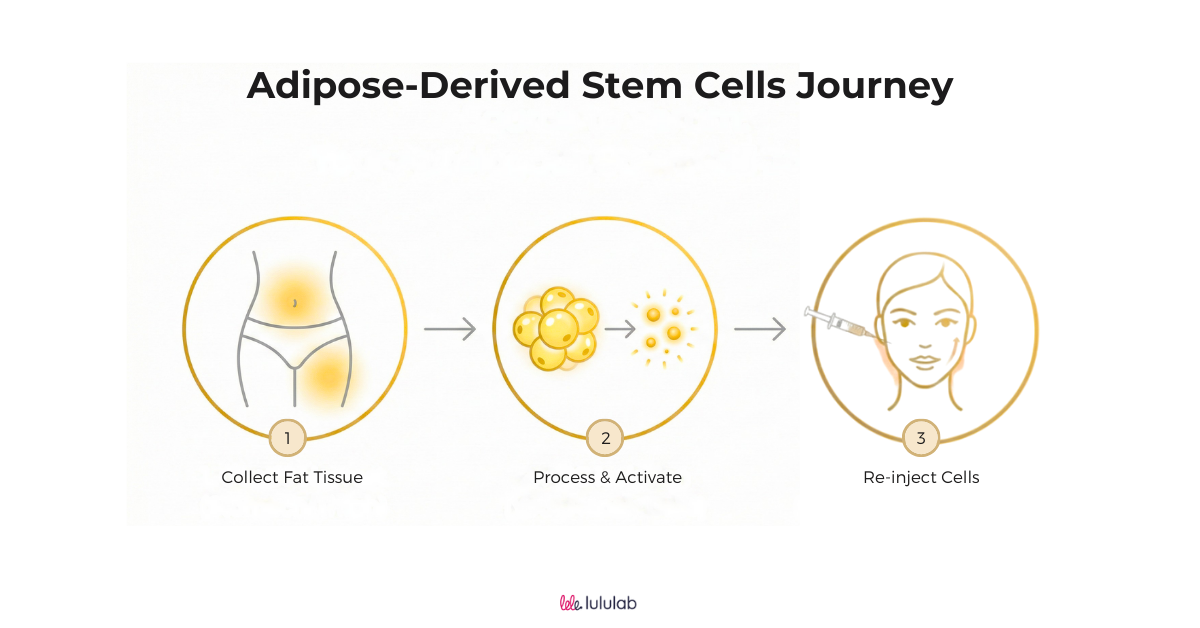
→ Step 2: Collection (Harvesting)
The specialist performs a minimally invasive technique (mini-liposuction) to harvest a small amount of adipose tissue (fat), usually from the thigh or abdomen. This is done under local anesthesia and takes about 30 minutes.
→ Step 3: Processing (The Lab Phase)
This is the main difference in timing. The fat is processed in a sterile lab to isolate the adipose-derived stem cells. This takes roughly 2 hours.
Note: You don’t have to wait in the lobby. Most clinics provide a private recovery suite where you can rest, have lunch, or receive a soothing facial while the lab works.
→ Step 4: Application
Once the cells are concentrated and activated, they are re-injected into your face or scalp.
→ Total Duration: Plan for a total of 4 to 5 hours at the clinic
→ Downtime & Recovery: Recovery is quick, but slightly more involved than donor cells. You may experience mild swelling or bruising at the harvest site (thigh/stomach) for a few days.
Travel Tip: Most patients schedule this at the beginning of their trip to allow for any minor swelling to subside before flying home, though you can usually resume sightseeing the very next day.
2. Umbilical Cord Stem Cells (From a Donor)
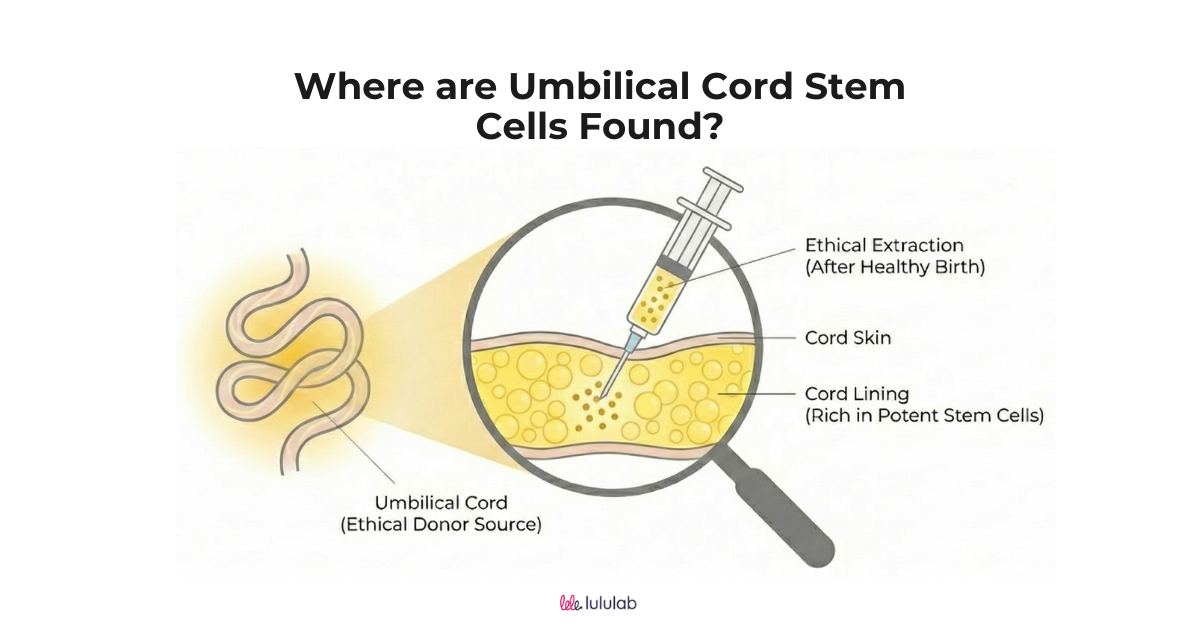
These are ethically sourced donor cells derived from the umbilical cord lining after a healthy birth.
Why are they safe?
These are the "youngest" and most energetic cells available. They have a higher potency than older cells, making them incredible for deep regeneration.
What do they do?
Often used in advanced clinics for patients who want maximum regenerative power without undergoing liposuction.
Procedure & Duration
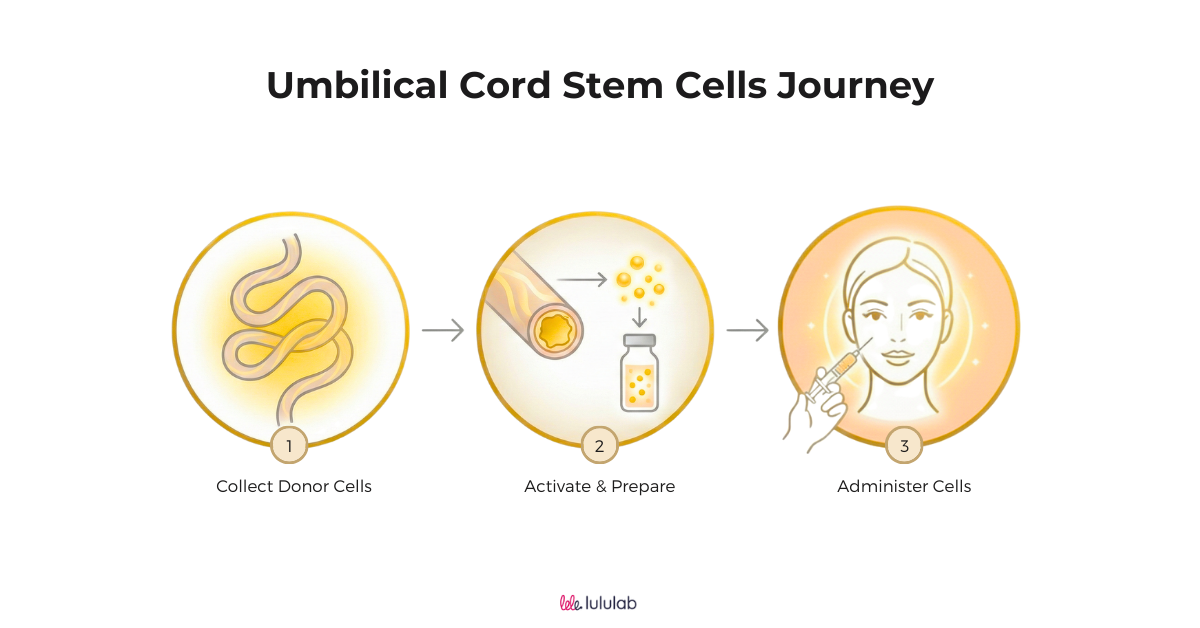
If you opt for donor cells, the process is streamlined and highly efficient. Since there is no harvesting required, this is the most time-effective option for international patients with tight itineraries.
→ Step 1: Consultation & Skin Analysis
Your journey begins with a medical check and an AI skin analysis to determine the best treatment plan. Since these cells are pre-screened and safe, extensive pre-surgical testing is usually not required.
→ Step 2: Preparation
While you relax in a private room, the stem cells—sourced from ethically derived umbilical cord blood—are thawed and "activated" in the lab to ensure maximum potency.
→ Step 3: Application
The cells are administered either via stem cell IV injection (for systemic health) or direct injection into the target skin areas.
→ Total Duration
Expect to spend about 1.5 to 2 hours total at the clinic.
→ Downtime & Recovery
There is virtually zero downtime. You might see slight redness at injection points, but you can immediately resume sightseeing or shopping.
3. Bone Marrow-Derived (Medical Focus)
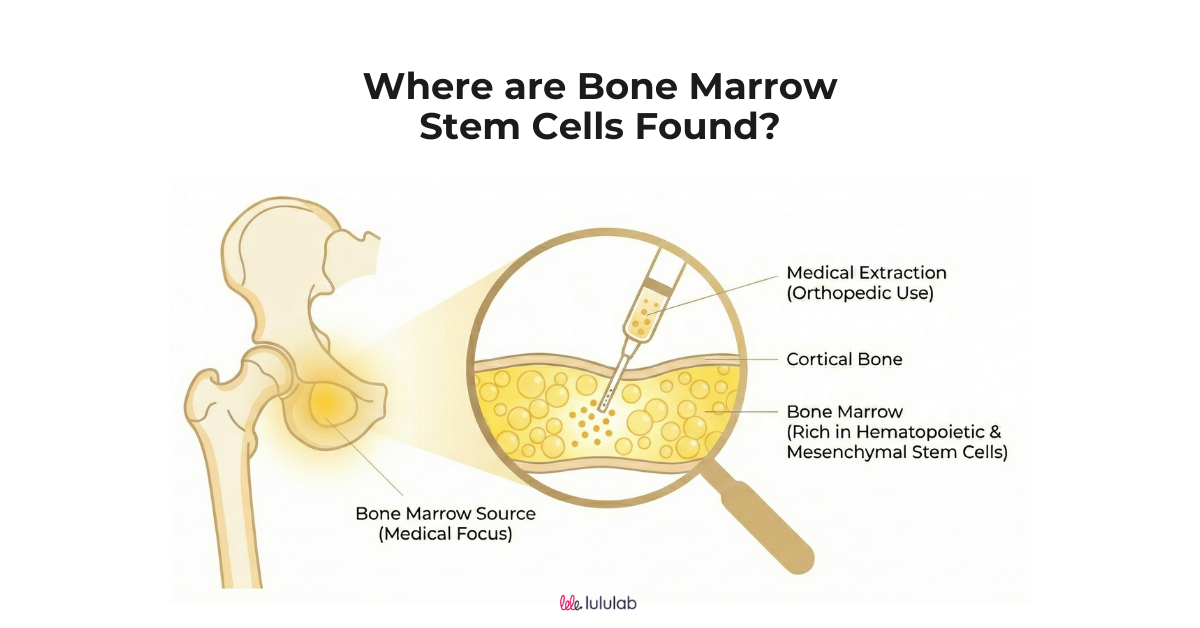
You might hear about bone marrow stem cells, but these are rarely used for pure aesthetics. They are generally reserved for orthopedic surgery or treating deep medical issues (like joint repair). In the beauty world, medical experts generally stick to fat or cord-derived cells for the best skin results.
Why are they safe?
Like adipose cells, these are autologous (from your own body), meaning the risk of immune rejection or allergic reaction is virtually zero.
What do they do?
They are rich in hematopoietic (blood-forming) and mesenchymal stem cells, making them incredible for deep structural repair like regenerating cartilage or treating joint issues. However, for pure skin rejuvenation, they are less efficient than fat-derived cells because they provide less volume restoration and contain fewer "skin-specific" regenerative factors per volume.
Procedure & Duration
Because bone marrow must be extracted directly from the hip bone, the process is more invasive and technically demanding than other stem cell options. After a thorough medical screening, the specialist performs a bone aspiration under local anesthesia to collect the marrow. The sample is then processed to isolate the stem cells and applied to the intended treatment area.
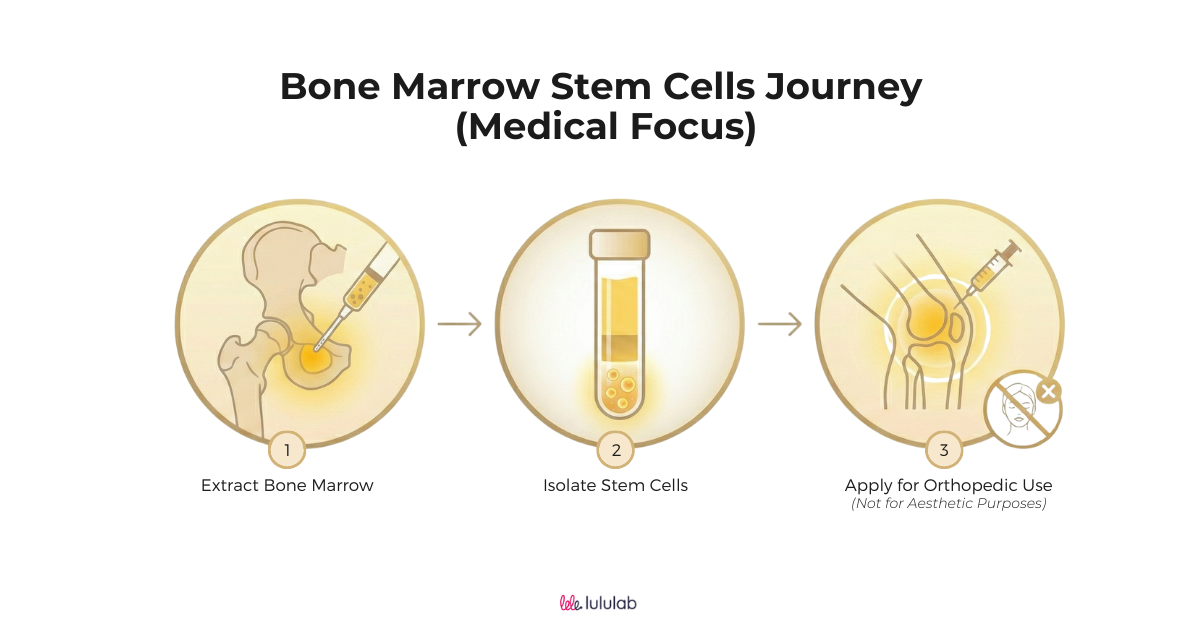
Total time: around 4–5 hours.
Downtime: Recovery is noticeably longer. Patients typically experience soreness or bruising at the extraction site for several days, which may limit comfort and mobility—one of the reasons this method isn’t commonly chosen for aesthetic purposes, especially by short-term travelers.
Note on Research Cells:
You may hear terms like embryonic stem cells, pluripotent stem cells, or induced pluripotent stem cells. These are often the subject of extensive clinical trials and academic medical research (such as creating dopamine-producing cells for Parkinson's). However, for safety and ethical reasons, aesthetic treatments in Korea primarily rely on non-embryonic stem cells—such as ASCs and umbilical cord lining cells—which are considered safe, ethical, and clinically validated
How AI Skin Analysis & LuluTI Personalize Your Treatment
Before any needle touches your skin, understanding your unique skin code is essential. This is where Lululab’s AI Skin Analysis changes the game.
Using advanced AI technology trained on over 5 million skin data points, the system scans your skin to reveal what is happening beneath the surface. This deep learning algorithm does more than provide a score; it generates your unique LuluTI Skin Code.
LuluTI is a specialized system that translates complex skin metrics into a simple 4-letter code, effectively creating a map for the user to follow.
Here is how decoding your LuluTI helps customize your stem cell therapy:

W (Wrinkle) ↔ E (Elasticity): If your skin analysis leans toward ‘W’, it indicates a loss of skin density and structure. Stem cell therapy addresses this by stimulating the production of both collagen and elastin, rebuilding the underlying support system to help shift your skin state toward ‘E’ (Elasticity).
A (Acne) ↔ U (Unflawed): If you show high ‘A’ markers, your skin may be prone to inflammation. The anti-inflammatory properties of stem cells can help move you toward the ‘U’ (Unflawed) state.
T (Texture) ↔ S (Smooth): If your skin analysis leans towards ‘T’, it points to enlarged pores and rough surface texture. Stem cell therapy helps tighten the skin surrounding the pores (by boosting elasticity) while smoothing roughness through cellular regeneration, moving you closer to an ‘S’ (Smooth) state. The analysis also helps the doctor understand the cause of your texture issues so they can adjust the stem cell concentration accordingly.
P (Pigmentation) ↔ C (Clean): Whether your spots are due to aging (W-P) or past acne healing (A-P), the AI clarifies the origin. This allows the treatment to target the specific cause, using stem cells to regulate melanin production and accelerate turnover, effectively fading stubborn spots to restore a ‘C’ (Clean) tone.
By identifying these interconnected tendencies, AI Skin Analysis ensures your stem cell therapy isn't a "one-size-fits-all" procedure, but a tailored solution for your specific skin code.
Benefits Beyond Beauty
While we focus on aesthetics, it is reassuring to know that stem cell medicine is grounded in serious science. The same mechanisms that smooth a fine line are used in therapies to repair diseased tissues. This means that when you choose cell therapy for beauty, you are tapping into a biological process designed for deep tissue repair. Ultimately, beauty stems from health.
What to Know Before Getting It
We believe in making informed choices. Here is a checklist to consider:
☑ Safety & Regulation: Only seek treatment at licensed medical institutions in Korea. Look for clinics that adhere to the Advanced Regenerative Medicine safety standards.
☑ Expertise: Verify that your provider is skilled and has relevant experience in dermatology, plastic surgery, or regenerative medicine
☑ Realistic Expectations: This is not a face-lift. The results are natural and gradual. You will look like a "rested" version of yourself, not a different person.
☑ Longevity: Results can last anywhere from 6 to 12 months, or longer with proper maintenance.
☑ Cost: Stem cell therapy is a premium investment. Prices vary depending on the cell source and method, but transparency is key. Be sure to ask for a full breakdown during consultation.
Finding the right provider who aligns with your specific needs is the most critical step in ensuring a safe and successful outcome. To help you navigate this, we have curated a selection of reputable locations for you to explore; you can view our list of trusted clinics here.
The Future of Stem Cell Beauty
We are just scratching the surface. The future of skincare lies in the convergence of biology and data. Imagine a world where your LuluTI skin data evolves in real-time, guiding the precise dosage of exosomes or growth factors you need at every stage of your life. Korea is leading this charge, moving us toward a future where the aging process is not "fixed," but gracefully managed.
Smarter Skincare Starts Here
Stem cell therapy represents a beautiful balance of nature and technology. Whether you are looking to address a specific concern like hair cell regeneration or simply want to restore skin elasticity, this science-backed approach offers a promising path forward.
However, the most successful transformations happen when science meets strategy. Before diving into treatments, knowing exactly what your skin needs can make all the difference—especially if you are visiting from abroad. To ensure your time in Korea is as effective as possible, it is worth exploring “Why your Seoul trip isn’t complete without an AI skin analysis”.
Your skincare journey is personal. If you are ready to explore the possibilities of regenerative medicine, we are here to help you navigate the options with clarity and care.
FAQs
1. Is stem cell therapy safe for cosmetic use?
Yes, when performed by licensed professionals using autologous stem cells (your own) or regulated donor cells, it has a high safety profile.
2. How long do results last?
While individual results vary, the rejuvenated effects typically last between 6 months to over a year.
3. Does it hurt?
Discomfort is minimal. Numbing cream or local anesthesia is used to ensure you are comfortable.
4. Is there downtime?
Very little. You might have some mild swelling or redness for 1–3 days, but most people resume normal activities almost immediately.
5. How do I know if I’m a good candidate?
An AI Skin Analysis is the best first step to see if stem cell regenerative treatments are right for your skin concerns.